

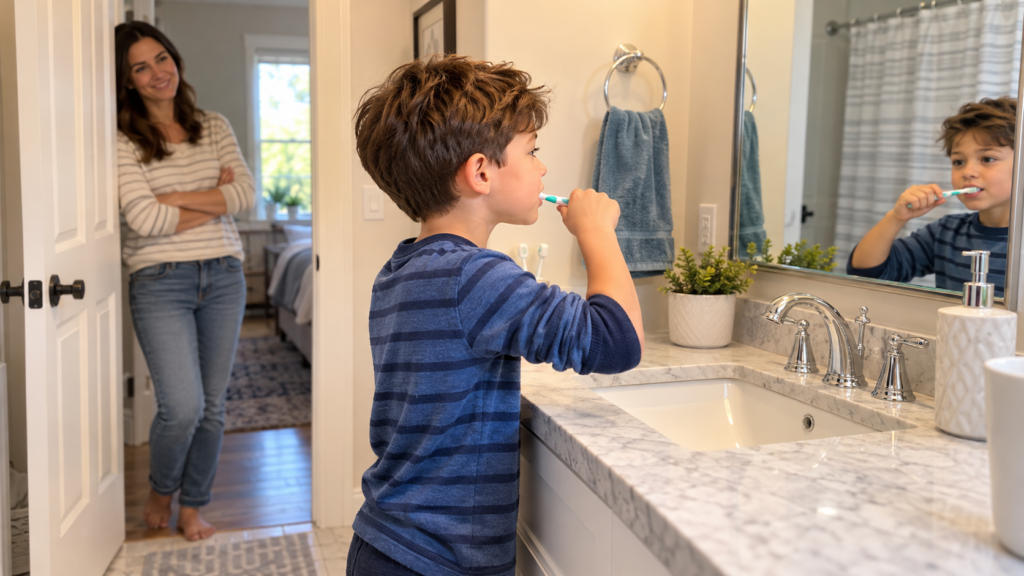
Children often want to brush alone before they can clean every tooth thoroughly. Letting them practice helps build confidence, while adult support protects the areas they still miss.
Many children need hands-on brushing help until around age seven or eight, followed by continued supervision as their skills improve. There is no single birthday when every child becomes ready.
The decision depends on coordination, technique, attention, and consistency. A child may manage some parts of the routine independently while still needing help with others.
At Sunset Tower Family & Implant Dentistry, we help families make that transition gradually, with practical guidance and realistic expectations.
Why Does Brushing Independence Take Time?
Brushing requires more than moving a toothbrush around the mouth. Children must position the bristles, control pressure, reach different surfaces, and stay focused long enough to clean thoroughly.
The front teeth are easy to see, but back molars, inner surfaces, and the gumline can be harder to reach. A child may brush enthusiastically while repeatedly missing these areas.
Brushing also involves learning a routine. Remembering to begin, using toothpaste appropriately, and putting enough time into the task are separate skills.
Our children’s dentistry care includes discussing home habits with parents. If you are unsure how much help your child needs, ask the team to watch their technique and demonstrate suitable adjustments.
How Can Parents Gradually Hand Over Brushing?
The transition works best when the amount of help changes with your child’s abilities.
Start With Adult Brushing and Child Practice
For toddlers and preschoolers, an adult should perform the cleaning. Children can take a turn to become familiar with the brush and practice movements.
Choose a position that lets you see the teeth and help comfortably. Your dental team can suggest an approach that suits your child’s age and needs.
Let Your Child Brush, Then Finish Thoroughly
As skills develop, let your child brush first. Watch where the brush reaches, then clean any surfaces that still need attention.
This final adult turn should be thorough. Avoid treating it as a quick swipe that must be finished in a few seconds.
Use calm language such as, “You did the front teeth. I’ll help with the backs.” The aim is to teach the next skill while completing the cleaning.
Move From Hands-On Help to Observation
When your child reaches all areas more reliably, try watching rather than taking over immediately.
Offer a specific reminder, such as checking the inside surfaces or returning to the back molars. If the reminder is not enough, step in and help.
Keep Checking as Independence Grows
Once technique becomes consistent, you can reduce hands-on assistance while continuing to observe and check the routine.
Children may need more support when tired, distracted, or adjusting to changes in their mouth. Returning to some assistance is a reasonable adjustment.
What Signs Suggest Your Child Is Ready for More Independence?
Watch a complete brushing session instead of relying on age or confidence alone.
Useful observations include whether your child can:
- Reach the outer, inner, and chewing surfaces, including back teeth.
- Clean near the gumline using gentle, controlled movements.
- Brush for about two minutes without skipping large areas.
- Use toothpaste appropriately and spit out the excess.
- Follow an organized routine and respond to helpful reminders.
These are practical observations, not a validated readiness test. Look for repeated success rather than assuming one good session means the skill is mastered.
A child who brushes well but needs a reminder to start may need help with routine management rather than hands-on cleaning. Another child may remember every session but still need assistance reaching the back teeth.
For example, your child might spend two minutes brushing the front surfaces but miss the tongue-facing surfaces. Keeping the timer going longer would not address the main issue. Demonstrating where to place the brush, then helping clean that area, would be more useful.
What Technique Should Children Learn?
Use a soft-bristled toothbrush with a head that fits comfortably in your child’s mouth. Brush twice daily with fluoride toothpaste, aiming for about two minutes of thorough cleaning.
Teach an order your child can follow, such as working around the upper teeth and then the lower teeth. Within each area, include the outside, inside, and chewing surfaces.
Position the bristles near the gumline and use gentle movements rather than forceful scrubbing. A dental professional can demonstrate the angle and motion in person.
A timer or song can help children understand the duration, but time alone does not confirm that every surface is clean.
Manual and electric brushes can both work when used correctly. An electric brush may help some children, but they still need to position it properly and move through the whole mouth.
How Much Toothpaste Should a Child Use?
For children younger than three, use a smear of fluoride toothpaste about the size of a grain of rice. For ages three through six, use a pea-sized amount.
An adult should place toothpaste on the brush for young children and supervise its use. Encourage children to spit out excess toothpaste as they become able to do so.
Once children can spit reliably, remind them not to rinse with water immediately afterward, which washes away fluoride left on the teeth.
For an older child or one who has difficulty spitting, ask the dental team about an appropriate amount and practical supervision.
Does Independent Brushing Mean Independent Flossing?
Not necessarily. Cleaning between teeth requires different hand movements and may need adult help for longer.
Begin cleaning between teeth when two teeth touch. Your dental team can demonstrate floss or another suitable tool based on the child’s teeth and abilities.
Many children take over flossing around age 10 or 11, but the deciding factor is whether they can clean thoroughly and gently.
Show how to clean against the sides of the teeth rather than snapping floss into the gums. Keep helping where needed, even if brushing is already mostly independent.
How Can You Make the Routine Easier?
A predictable morning and bedtime routine can reduce repeated negotiations. Keep the brush and toothpaste ready, allow enough time, and use short instructions.
Let your child make manageable choices, such as selecting an age-appropriate toothbrush or choosing between two toothpaste flavors containing fluoride.
Brushing together can provide a useful demonstration. Praise specific progress, such as remembering the back teeth, rather than expecting immediate perfection.
If brushing becomes difficult, consider what is getting in the way. The child may dislike the flavor, find the brush uncomfortable, feel tired, or need a clearer sequence.
A visual chart, timer, adapted handle, or different brush may help. Introduce changes one at a time so you can see what works.
What if Your Child Needs Help Longer?
Fine motor differences, sensory sensitivities, attention challenges, developmental needs, or orthodontic appliances can affect cleaning.
Support should be based on the child’s needs. Continued assistance does not mean they have failed or that a parent has done something wrong.
Tell the dental team which part is difficult. For example, your child may tolerate front-tooth brushing but struggle with the sensation near the back teeth.
A demonstration and an individualized plan can help you choose practical tools and divide the routine into manageable steps. Independence can grow in some areas while assistance continues in others.
When Should You Ask the Dentist for Help?
Ask for guidance if the same areas are repeatedly missed or brushing regularly causes distress.
Visible buildup, persistent bad breath, recurring gum bleeding, unusual spots, or sensitivity also deserve discussion. These findings do not automatically mean your child is brushing poorly.
Tooth shape, crowded areas, diet, and enamel differences can influence oral health. An examination helps distinguish a technique problem from another concern.
For families arranging a first visit, our new patient information explains what to expect and what information to bring.
Frequently Asked Questions
Can a five-year-old brush alone?
A five-year-old can practice, but most children this age still need an adult to complete the cleaning. Encourage participation while helping reach every surface.
Is age seven old enough to stop helping?
Some children are ready for less hands-on help around this age. Others need more support. Watch their technique and continue supervision rather than treating age seven as a cutoff.
When can parents stop checking brushing?
Reduce checks as your child consistently cleans thoroughly and manages the routine. Occasional observation remains useful, and your dentist can help assess areas that are difficult to judge at home.
Is an electric toothbrush better for independence?
It may help some children, but it does not guarantee thorough cleaning. Choose a comfortable, age-appropriate brush and teach proper positioning and coverage.
When can children floss without help?
Many develop the coordination around age 10 or 11. Continue assistance until your child can clean between the teeth effectively and gently.
Support Your Child’s Growing Independence
Learning to brush is a gradual process. Practice, specific guidance, and appropriate adult support help children build the skills they need.
At Sunset Tower Family & Implant Dentistry in Sunset Hills, MO, we welcome questions about your child’s brushing habits and developing smile.
Schedule Your Child’s Dental Visit for practical guidance about technique, home care, and the right level of support.